
Kia Seltos SP2 (2021-2026) Service Manual / Restraint
Kia Seltos: Restraint
Contents:
- Single-Use Parts
- Specification
- Special Service Tools
- General Safety Information and Caution
- Description and Operation
- Repair Procedures
- SRSCM
- Airbag Module
- Seat Belt System
Single-Use Parts
| Single-Use Parts |
Non-reusable parts (Single-Use Parts)
Workshop manual provides “Components and Components Location� which can be used to identify “Non-reusable parts�.
When repairing a vehicle, Non-reusable parts such as fasteners, gaskets, washers, clips and garnishes must be
replaced. Kia Non-reusable parts are designed to be installed only once.
Before working on a vehicle, check “Components and Components Location� to find the non-reusable parts in a
system.
※ Symbol of Non-reusable parts
|
Symbol |
Meaning |
|
|
Do not reuse the part. Replace with a new one. |

※ Example of “Components and Components Location�
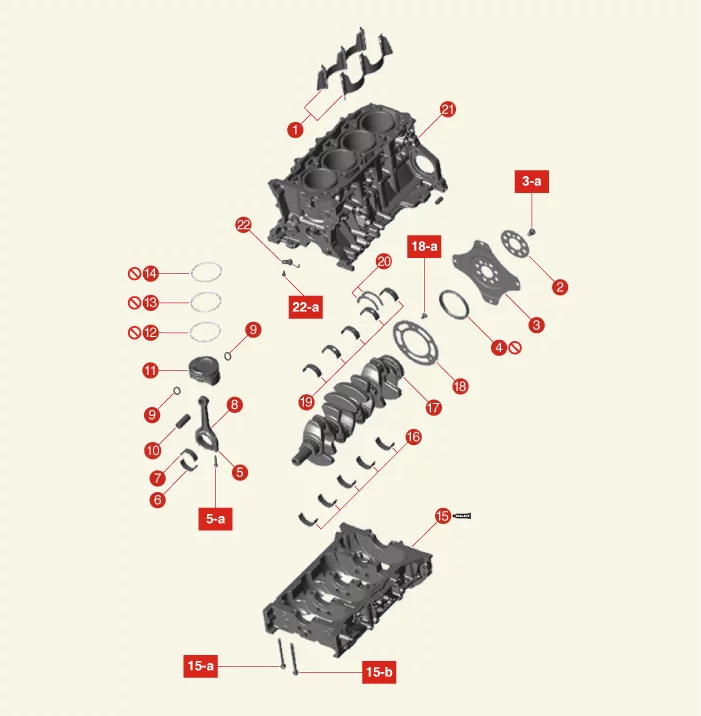
Specification ➤
Special Service Tools
| Special Service Tool |
|
Tool Name / Number |
Illustration |
Description |
|
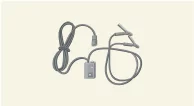
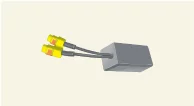
Airbag deployment tool 0957A - 34100A |
|
Used when deploying the airbag |
|
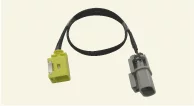
Deployment adapter 0K57A - 3U100A |
|
Used when deploying DAB, PAB, CAB modules and BPT Used with 0957A - 34100A |
|
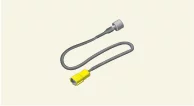
Deployment adapter 0957A - 2W100 |
|
Used when deploying the SAB module Used with 0957A - 34100A |
|
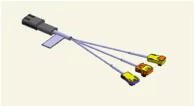
Dummy 0957A - 38200 |
|
Used to check the airbag module |
|
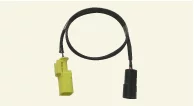
Dummy adapter 0957A - 2W200 |
|
Used to check the resistance of SAB module Used with 0957A - 38200 |
|
Dummy adapter 0957A - 2G000 |
|
Used to check resistance of DAB, PAB, CAB modules and BPT Used with 0957A - 38200 |
DAB : Driver Airbag
PAB : Passenger Airbag
SAB : Side Airbag
CAB : Curtain Airbag
BPT : Seat Belt Pretensioner
KAB : Knee Airbag
General Safety Information and Caution ➤
Description and Operation
| Description |
The airbag system is a supplemental restraint system (SRS) to protect the driver and passengers from injuries by
operating the airbags and seat belt pretensioner (BPT) installed on the driver's and front passenger's seats in the
event of a vehicle collision.
The SRS airbags includes Driver Airbag (DAB) module, driver Knee Airbag (KAB) module, front Passenger's Airbag
(PAB) module, driver's and front passenger's seat Belt Pretensioner (BPT), anchor pretensioner, and Side Airbag
(SAB) module located on the left and right of driver's and front passenger's seat, and a Curtain Airbag (CAB)
module. The SRS control module that controls the SRS airbags, is located at the bottom of the floor console. The SRS
airbags consist of a clock spring located on the steering column, a Front Impact Sensor (FIS) that detects a front
impact, a Side Impact Sensor (SIS) that detects a side impact, an airbag warning lamp located on the instrument
panel and the airbag system wiring.
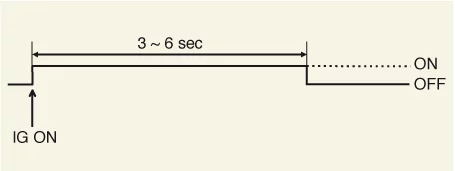
| Airbag warning lamp |
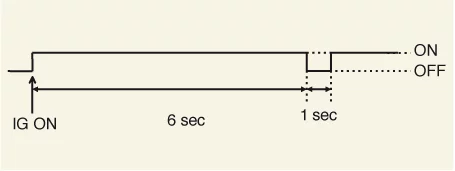
The airbag system control module turns on the airbag warning lamp by detecting whether there is an abnormality in
the airbag system when the power is applied.
| 1. |
When the airbag system is normal.
|
| 2. |
If there is any problem with the airbag system.
|
| 3. |
When in the variant coding (EOL) mode.
|
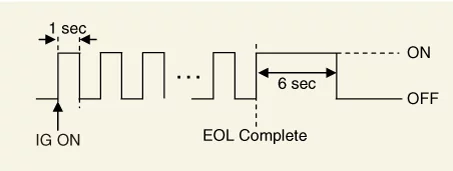
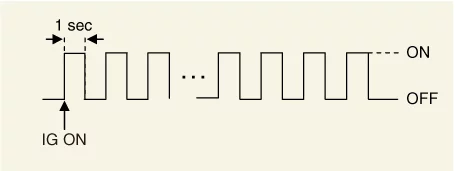
If there is a failure of the airbag system or an internal failure of the airbag system control module, variant
coding (EOL) should be re-performed after confirming the cause of failure and completing the action using a
diagnostic device (KDS).
In the following cases, the airbag warning lamp continues to illuminate.
| – |
If there is a failure of the airbag system or an internal failure of the SRSCM.
|
| – |
If there is a Diagnostic Trouble Code (DTC).
|
| – |
While communicating with SRSCM by using a diagnostic device (KDS).
|
If a failure occurs in which the airbag system control module cannot operate, the operation of the airbag warning
light cannot be controlled normally. In this case, the airbag warning light operates normally through a circuit that
operates independently of the airbag system control module. These cases are:
| – |
Loss of battery power in the airbag system control module: Airbag warning lamp stays on.
|
| – |
Loss of internal operating voltage: Airbag warning lamp stays on.
|
| – |
Loss of airbag system control module operation: Airbag warning lamp stays on
|
| – |
SRSCM not connected
|
Repair Procedures
| Replacement of components after deploying the SRS |
|

| 1. |
When the front airbag(s) deployed after collision, replace the following components.
|
| 2. |
When the Side Airbag (SAB)/Curtain Airbag (CAB) module is deployed after a crash, replace the following
components.
|
| 3. |
After repairing the vehicle, check if the SRS operates normally.
|
SRSCM ➤
Airbag Module ➤
Seat Belt System ➤


Other information:
Kia Seltos SP2 (2021-2026) Service Manual: Engine coolant
The Kia Seltos high-pressure cooling system uses a reservoir filled with year-round antifreeze coolant. This coolant is installed at the factory and is designed to help protect the engine from overheating, freezing, and internal corrosion. Check the antifreeze protection and coolant level at least once a year, preferably at the beginning of the winter season, and before driving the Kia Seltos to a colder climate.Kia Seltos SP2 (2021-2026) Service Manual: Smart key immobilizer system
The Kia Seltos smart key immobilizer system helps protect the vehicle from theft. If an incorrectly coded key or an unauthorized electronic device is used, the vehicle's power system may be disabled and the engine may not start. When the ENGINE START/STOP button is placed in the ON position, the immobilizer system indicator should illuminate briefly and then turn off.